01
Compacting a subbase in beach sand
We grade and compact the subbase through the loose, marl-streaked coastal sand so the slab carries its load evenly, including the low runs where groundwater sits near the surface.
A Naples driveway has to hold the weight and win against the water on low coastal ground. We set it deep on a compacted sand base, run structural fiber and welded wire mesh through it, and grade it so summer storms head for the street rather than seeping under the slab.
Tear-out, forms, base, reinforcement, pour, screed, broom, joints, cure. The whole job, in 3D.
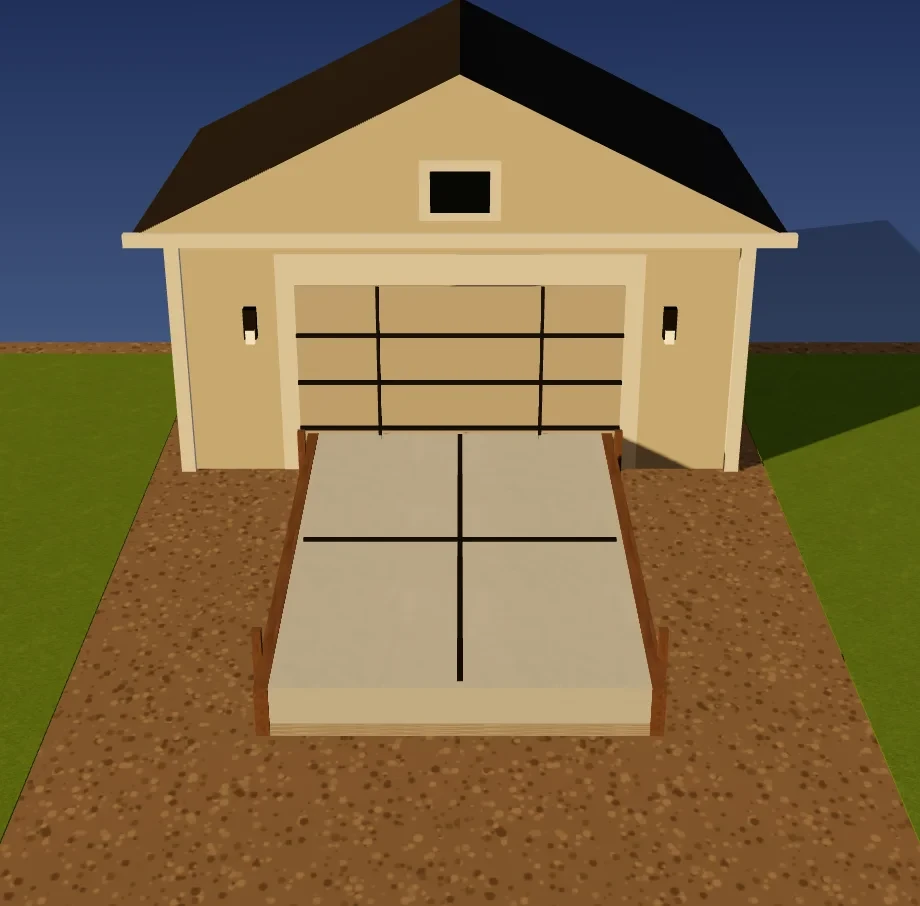
Drag the handle to reveal the finished pour.
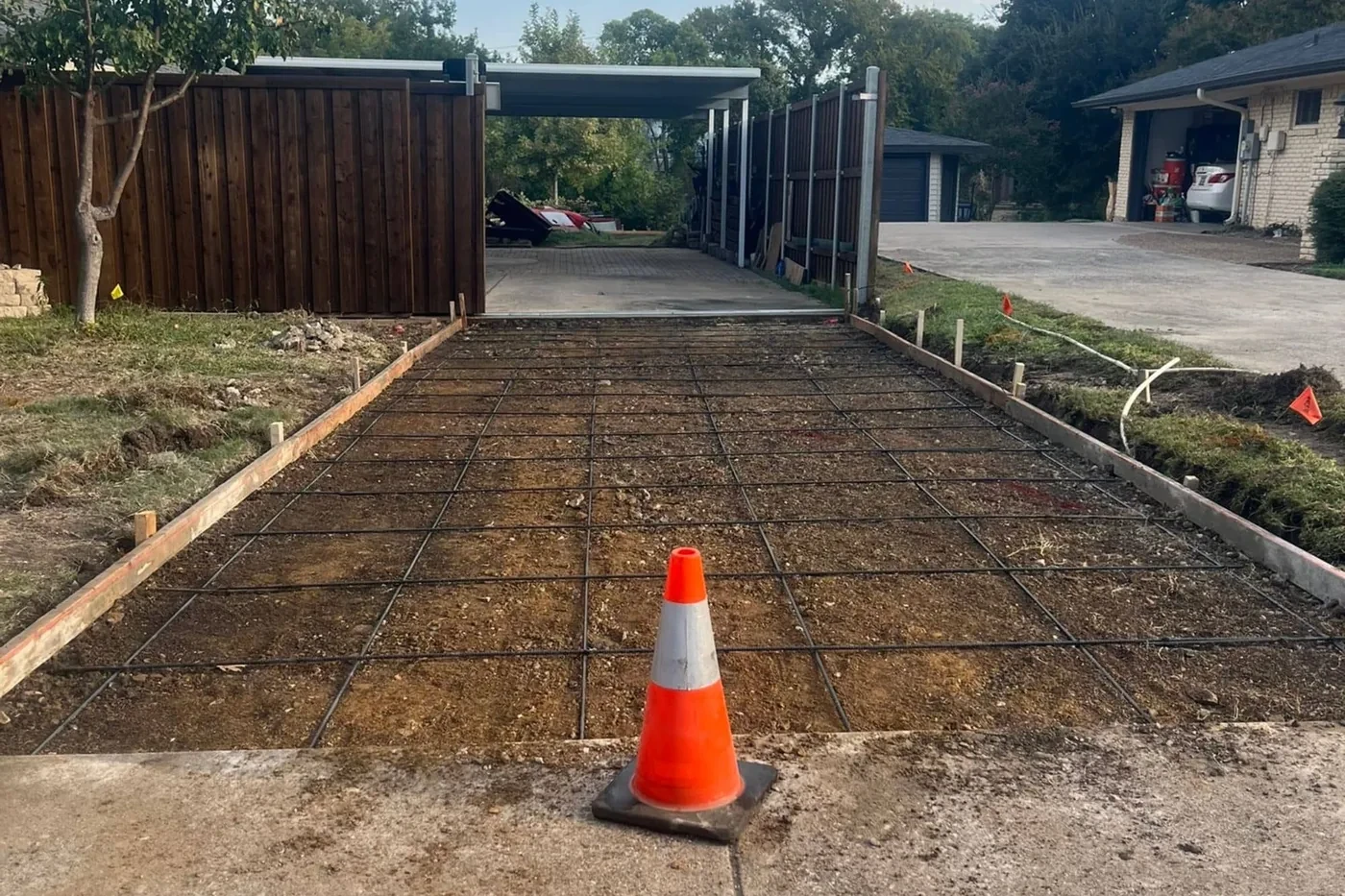
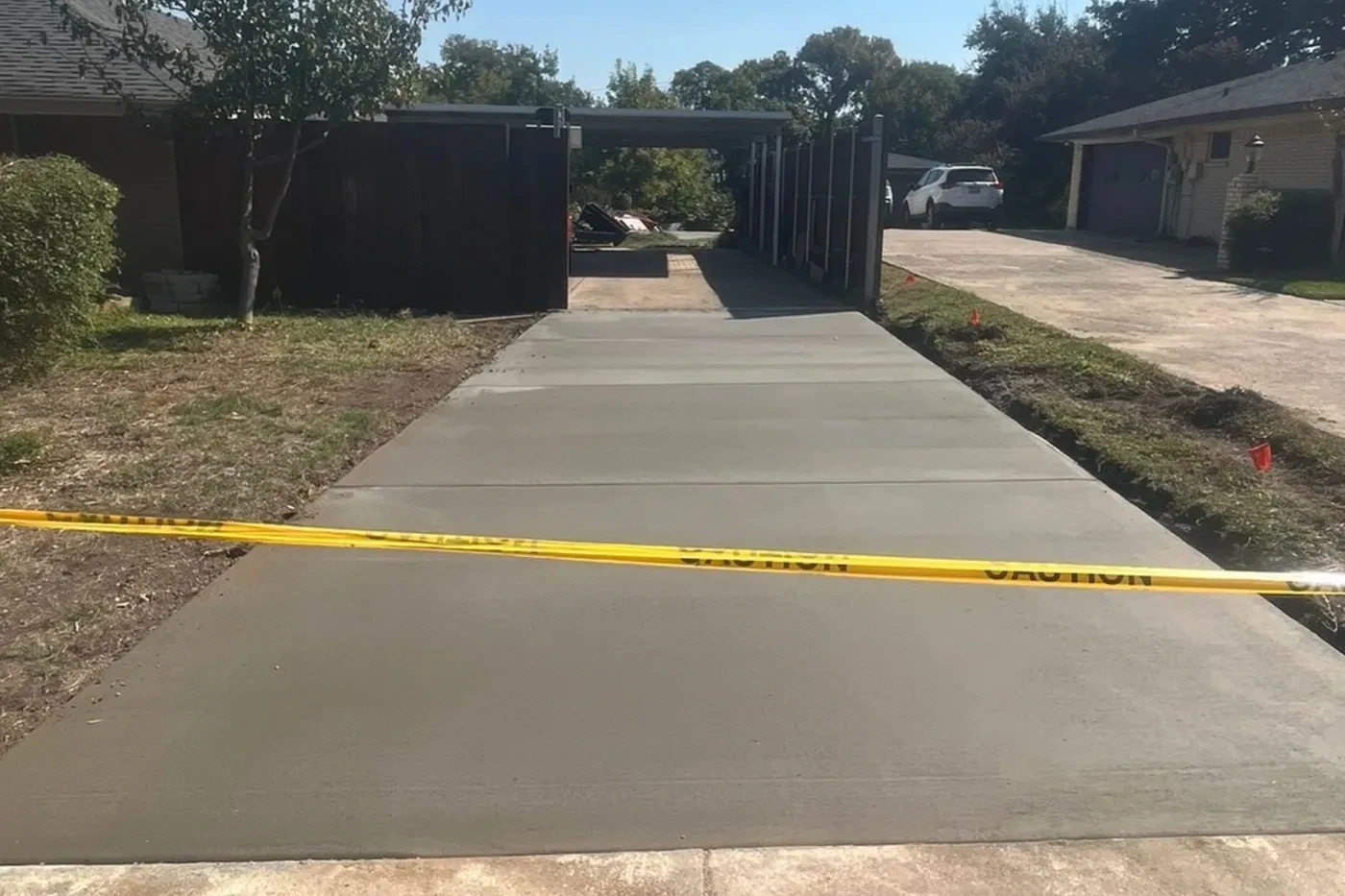
Credibility comes from how it's built, not from promises. Here's the order of operations on every concrete driveways job.
We grade and compact the subbase through the loose, marl-streaked coastal sand so the slab carries its load evenly, including the low runs where groundwater sits near the surface.
A driveway pours thicker than a patio, matched to the cars and to the boat trailer or coach you find on coastal lots, all of which press far harder than any backyard furniture.
The drive rides on structural fiber and welded wire mesh to share the wheel loads and lock the surface into one piece, the warm-climate approach, with extra cover over the steel where it runs near the water. A full rebar grid belongs to structural slabs, not a home driveway.
Expansion and control joints absorb the movement, and the slab is pitched so tropical downpours run to the street and the apron instead of stacking up against the garage on this flat ground.
You get a firm drive-on date, and we cure the pour with the coastal heat and humidity in the plan so it hardens all the way down rather than crusting over on top first.
Most contractors vanish after the deposit. We pick up the phone, show up when we say, and stand behind the work after the truck leaves. The follow-through is the difference.
A foreman we know runs your job and a vetted crew does the work, managed by Lucky's, one company accountable from the first call to the final walkthrough.
COI and lien waivers on file before we break ground. The documentation that lets commercial clients pay and gives homeowners peace of mind.
Prepped subgrade, reinforced and mixed to spec for the job, and proper curing. We build credibility through the process, not promises. On concrete driveways, that starts with compacting a subbase in beach sand.
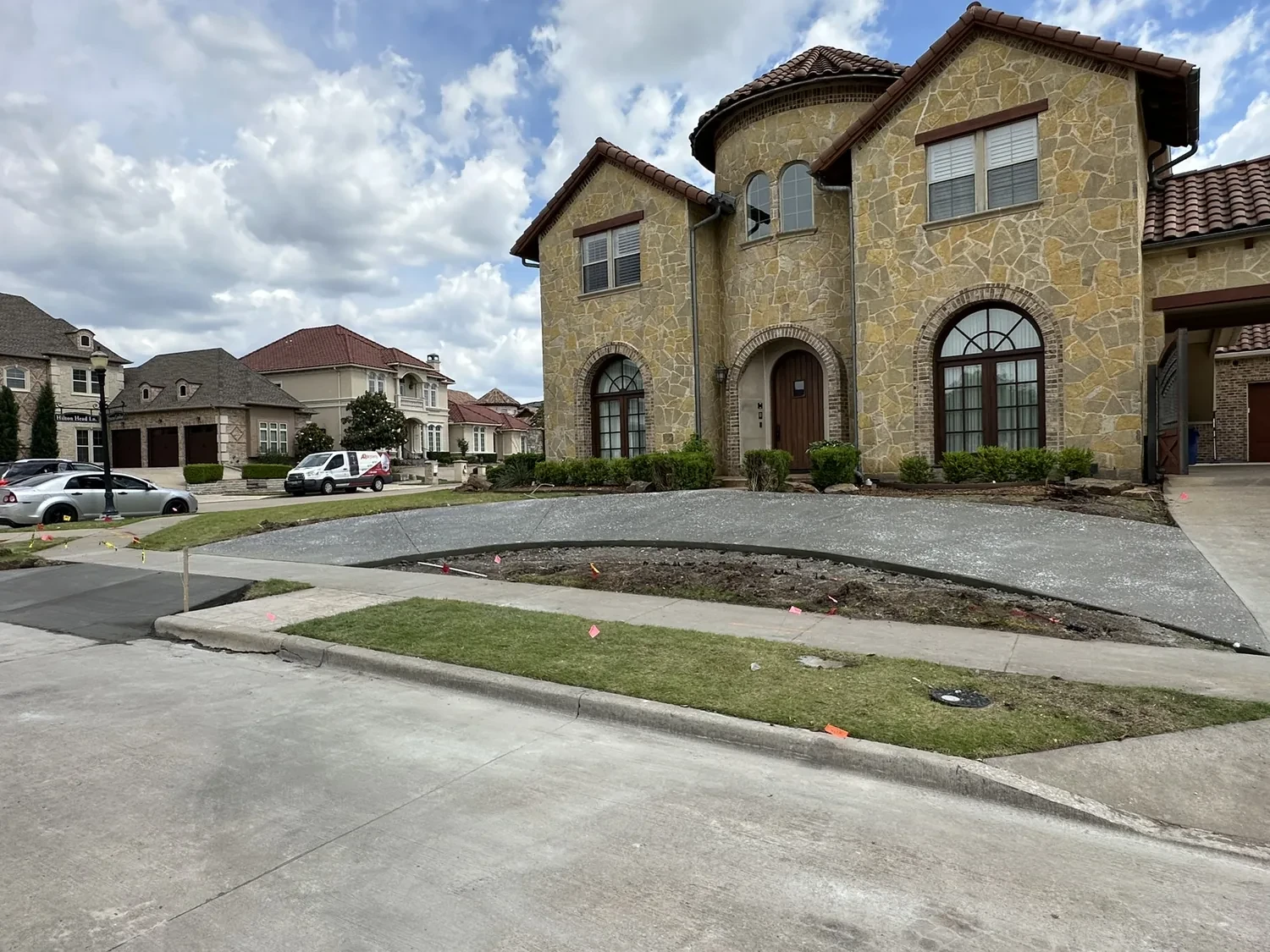
A driveway here costs more than a bare flatwork quote because it is built for sand, salt, and drainage at once: a base compacted over a high water table, fiber and welded wire mesh, cut joints, and a grade that moves storm water off. Expect standard residential drives to open around $8 to $14 a square foot, with decorative finishes or a heavy tear-out above that. Depth of 4 to 6 inches, the finish, the square footage, and any demolition move it from there, and the number is set on site, not over the phone.
A home driveway gets structural fiber through the mix and welded wire mesh across the slab, the coastal-climate method, plus thicker cover on the steel where the drive runs near the water. That pairing carries the wheel loads and ties the surface together without a rebar grid, which we keep for structural and heavy-load work.
On two fronts. Below, a base compacted over the loose marl-laced sand so nothing drops or lifts the slab from underneath. On top, fiber and welded wire mesh with cut joints so any movement is corralled into the lines we set. We also fall the slab so water runs off, since sand soaked unevenly under one corner is the fastest way to a crack.
Both do, given enough time. Salt air pushes chloride at any steel, which is why the cover gets thicker near the water, and runoff that lingers keeps the sandy base wet in patches and chews at the edges and joints. We grade the pour and the approach to shed it and build the base for a high water table.
Foot traffic comes first, vehicles later, because concrete keeps hardening well after it looks done. You get the exact dates for your slab, tied to the heat and humidity it cured under.
Yes, and the demolition, haul-off, and new pour ride in one quoted job. A slab split down the middle or dropped in spots usually points to a base or drainage fault, which we fix while the drive is open.
You'll hear back from a real person, usually the same day. No call center, no runaround, no chasing us down.
Booking up fast this season. Or call (239) 320-7822